Help Pets Handle Vacuum Stress: Calm Steps for Dogs & Cats
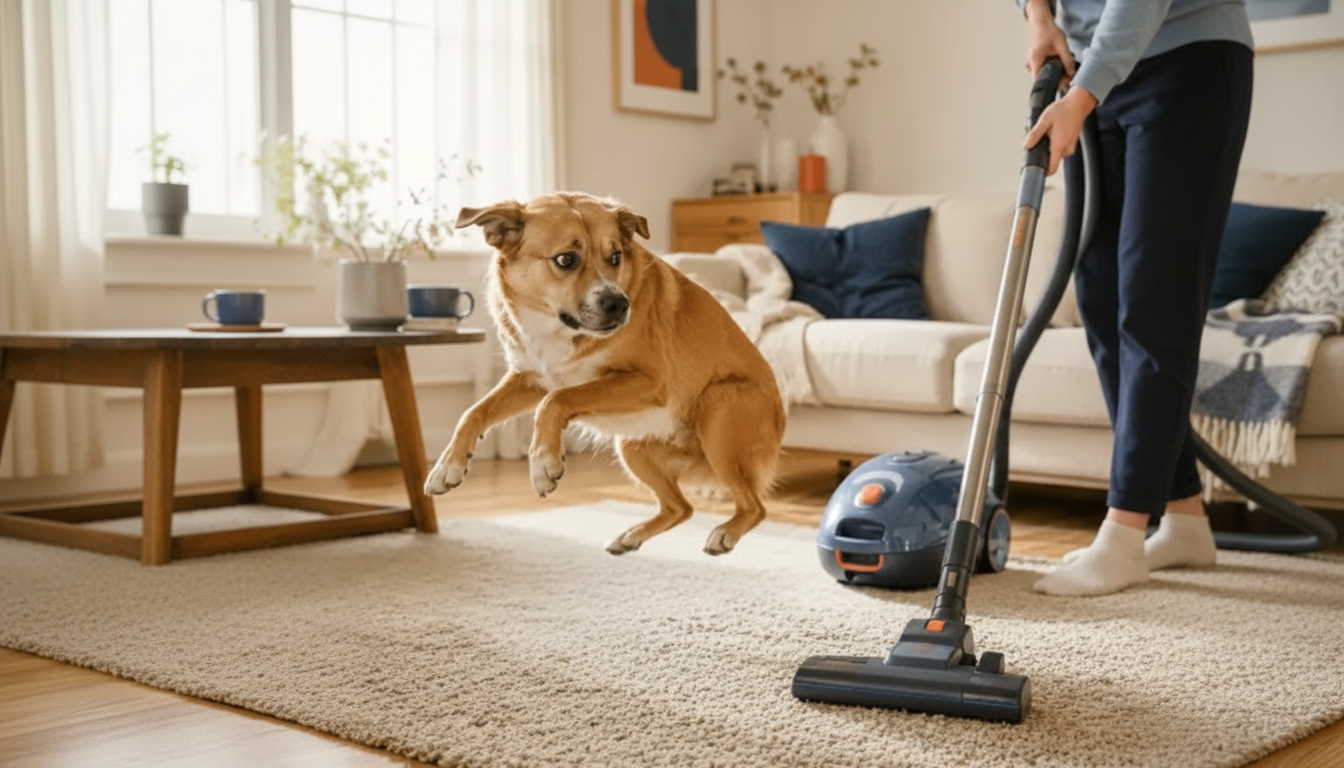
Why vacuums feel threatening to pets
To many dogs and cats, a vacuum cleaner is a perfect storm of sensory overload: loud noise, sharp pitch changes, fast movement, unfamiliar smell, and gusts of airflow. Even confident pets can startle when the sound suddenly turns on or when the machine changes direction.
Vacuums can also feel “predatory.” Dogs may interpret the back-and-forth motion as a chase and flip from fear into overarousal—barking, lunging, or trying to “attack” the machine. Cats often experience it as a looming threat that invades their space, especially if they’ve ever been cornered by the vacuum’s path. Past negative experiences (slipping on hard floors, being bumped, or being scolded while already scared) can make the reaction stronger the next time.
Stress signals to watch for before it escalates
Catching early stress cues keeps the session safe and makes training faster. When pets are pushed past their comfort threshold, they stop learning and start surviving.
Common dog stress signals
Tucked tail, lip licking, yawning, panting when it’s not hot, pacing, “whale eye” (showing the whites of the eyes), hiding, freezing, barking, or lunging.
Common cat stress signals
Flattened ears, crouching, tail puffing or lashing, dilated pupils, hiding, growling, swatting, or sudden frantic grooming.
If you notice these signs, increase distance, reduce intensity, or pause and reset. For a refresher on canine body language, the RSPCA’s guide is a helpful reference: Understanding dog body language.
Set up a “no-vacuum zone” that always stays safe
A reliable safe zone gives pets control. Instead of “enduring” the vacuum, they learn they can opt out—often the fastest route to calm behavior.
- Pick a quiet room away from the cleaning route, or set up a covered crate/covered bed area (for crate-trained dogs).
- Add familiar bedding plus a long-lasting chew or lick option for dogs; for cats, add a hide box and an elevated perch.
- Use a consistent end cue (for example, “All done cleaning”) so the routine has a clear finish.
- Mask sound peaks with a fan, white noise, or calm music.
- In multi-pet homes, separate pets to prevent stress “contagion” or redirected scuffles.
For cat stress and behavior basics, the ASPCA’s general care resources offer useful context: ASPCA – General Cat Care.
A graduated training plan that builds confidence
The goal is predictability and positive association—small steps repeated often. Keep sessions short (30–120 seconds is plenty), and stop while your pet is still comfortable.
Stage-by-stage desensitization
- Stage 1: Vacuum off and stationary. Place the vacuum at a distance. Reward calm looks and relaxed posture.
- Stage 2: Vacuum moved by hand (still off). Move it slowly a few inches. Reward relaxed body language and curiosity.
- Stage 3: Vacuum on in another room. Pair the sound with high-value treats, play, or a meal. A partially closed door can help.
- Stage 4: Vacuum on at a distance in the same room. Start far away and decrease distance gradually over days or weeks.
- Stage 5: Normal cleaning. Maintain predictable patterns, avoid sudden “lunges” toward your pet, and keep the safe zone available.
| Stage | Vacuum setup | Goal behavior | Ready to progress when… |
|---|---|---|---|
| 1 | Off, stationary | Pet can look at it and stay relaxed | Loose body, normal breathing, takes treats |
| 2 | Off, moved slowly | Pet stays in place or calmly follows at distance | No freezing, no hiding, curiosity without tension |
| 3 | On, in another room | Pet eats/plays during the sound | Recovers quickly, minimal startle response |
| 4 | On, same room (far) | Pet chooses safe spot and remains calm | Can disengage and settle within minutes |
| 5 | On, normal use | Pet remains relaxed or comfortably opts out | Stress signals stay mild and brief |
Day-of cleaning routine: reduce surprises and raise rewards
On cleaning day, think “lower baseline arousal, then pay well for calm.” Small adjustments make the vacuum less intense without skipping cleanliness.
Tools that can help (and how to use them safely)
When the behavior is risky or extreme
If there’s injury risk, nonstop panic, or sudden behavior change, loop in professionals. A veterinarian can help rule out pain, hearing issues, or cognitive changes; a qualified behavior professional can build a tailored plan. For safety basics around bite risk, see: AVMA – Dog Bite Prevention.
A structured option for calmer vacuum sessions
Consider Helping Pets Handle Vacuum Stress as a structured option to support calmer vacuum sessions alongside gradual training.
If you’re turning vacuum time into a quick “reset and clean” routine, comfortable gear can also make it easier to move slowly and predictably (which helps pets). Options like Adidas Men’s Grey Hoodie Sweatshirt or Adidas Women’s Grey Leather Sneakers can help keep cleaning sessions low-fuss and steady.
FAQ
Should a pet be comforted during vacuum noise or ignored?
Comfort is fine if it helps your pet feel safer; calm reassurance and treats can build positive associations. Avoid frantic soothing that mirrors panic, and focus on distance plus rewards for relaxed behavior.
How long does it take for a dog or cat to get used to the vacuum?
It varies by temperament and past experience; some pets improve in a few days, while others need weeks of short, gradual sessions. Move forward based on relaxed body language rather than a fixed timeline.
What if a dog tries to bite the vacuum?
Use management to prevent rehearsal (separate room, gate, or leash) and restart desensitization at a safe distance. If the risk is high or the dog can’t settle, consult a veterinarian and a qualified behavior professional.











Leave a comment